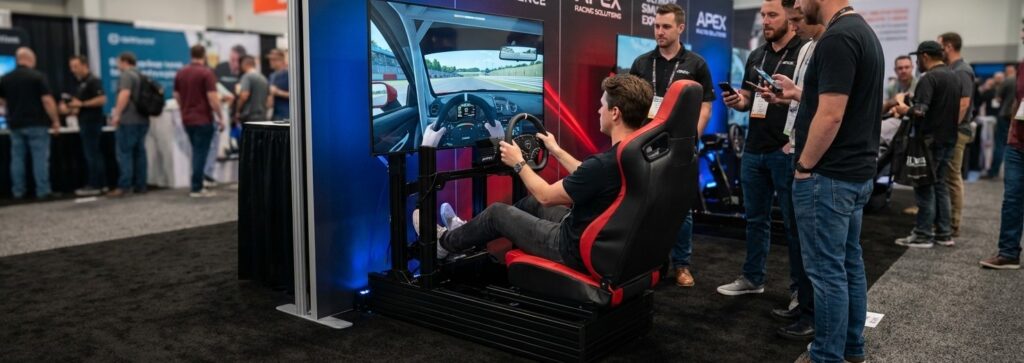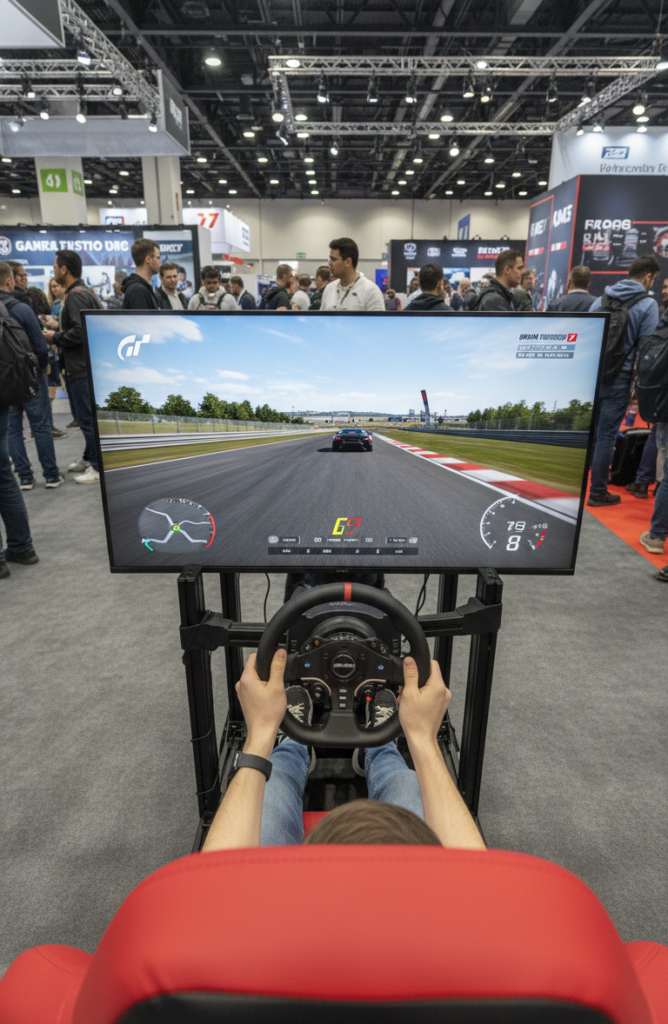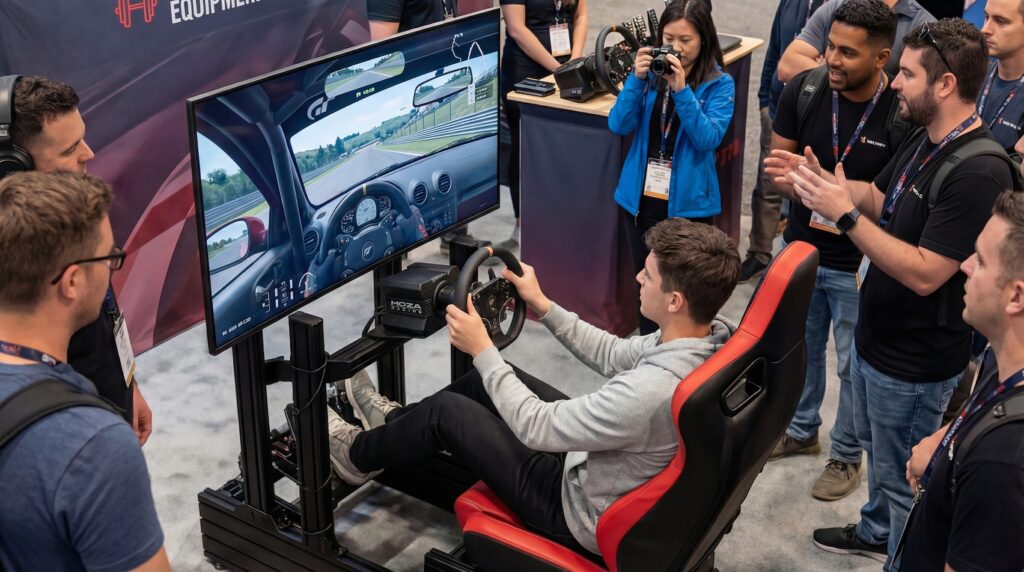
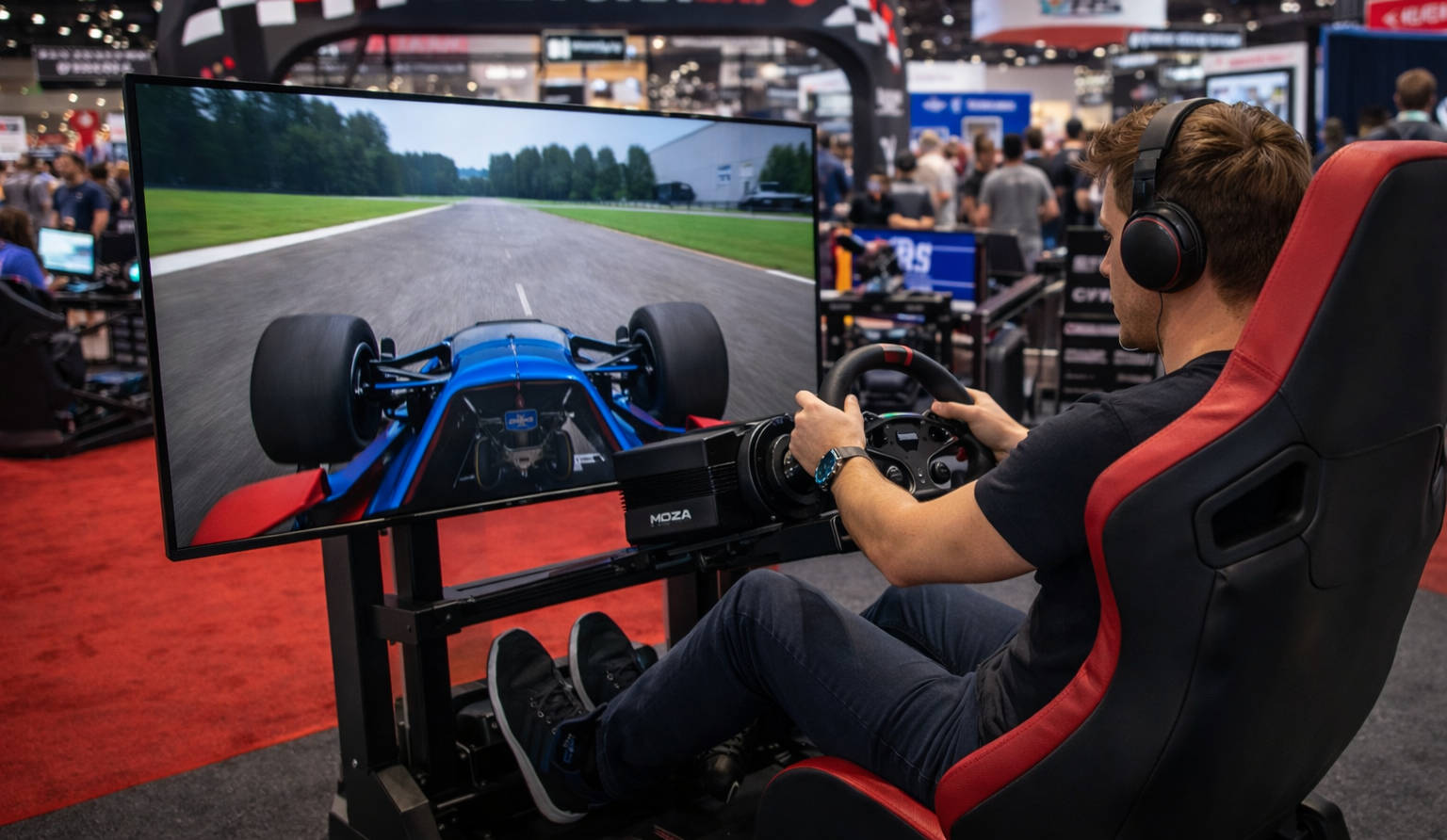
A racing simulator for trade shows can be a strong addition to a booth when it is planned with intention. Beyond its visual appeal, the effectiveness of the setup depends on how well it fits within the space, how easily attendees can interact with it, and how it supports the overall objective of the activation.
Rather than focusing only on the equipment itself, it is important to consider how the simulator will function throughout the event. A well-integrated setup can maintain steady participation and create a clear point of interaction within the booth.
Matching the Simulator Setup to Booth Size
Booth size plays a key role in determining how the setup should be positioned. The installation requires enough space not only for the structure itself, but also for participants to enter and exit comfortably, as well as for nearby attendees to observe.
In smaller booths, a clean and well-positioned configuration helps maintain visibility without overcrowding the space. In larger booths, there is more flexibility to create an open interaction area around the simulator.
The goal is to ensure that everything feels accessible and integrated into the booth rather than competing with the rest of the environment.
Integrating the Simulator Into the Booth Design
The placement within the booth has a direct impact on how attendees approach the experience. It should be positioned so that the activity is immediately understandable from a distance.
Clear lines of sight and an open layout allow passersby to recognize what is happening without needing explanation. When the experience is easy to read visually, it reduces hesitation and encourages spontaneous participation.
A well-integrated setup supports the overall presentation of the booth and makes the activation feel intentional.
Optimizing Visibility for a Racing Simulator for Trade Shows
Visibility is one of the most important factors in attracting attention within a trade show environment. The screen should be large enough and properly positioned so that nearby attendees can follow the action without needing to step into the booth.
At the same time, proportions should remain realistic. Screens that are excessively large compared to the structure can feel disconnected, while smaller displays may not provide enough visual impact.
Balanced visibility ensures that the simulator becomes a focal point while maintaining a professional and cohesive appearance.
Managing Participant Flow During the Event
A racing simulator for trade shows needs a clear participation structure to remain effective throughout the event. Without it, wait times can increase and reduce overall interaction.
Short, consistent sessions help maintain movement and allow more attendees to take part. Simple queue management and clear guidance ensure that the experience runs smoothly, even during peak traffic.
Maintaining a steady flow keeps the activation active and prevents the setup from losing momentum.
Aligning a Racing Simulator for Trade Shows With Event Objectives
The role of the activation should be clearly defined within the context of the event. Whether the focus is visibility, interaction, or structured participation, the setup should support that objective.
Participation can be organized to encourage repeat interaction or integrated with simple registration flows to support data collection. When aligned with clear goals, the experience becomes more than a standalone feature.
This ensures that the simulator contributes to meaningful outcomes during the event.
Considering Operation and On-Site Support
Operating a simulator during a live event requires ongoing attention. Participants may need guidance, sessions must be reset efficiently, and any technical issues should be addressed quickly.
Having support on-site helps maintain a professional experience and ensures that the activation runs without interruption. This is especially important in high-traffic environments where consistency matters.
Reliable operation contributes directly to how the experience is perceived.
Creating a Setup That Feels Intentional
A successful activation is not defined only by the equipment, but by how all elements of the setup work together. Layout, visibility, flow, and operation all shape how the experience is perceived.
When these elements are carefully considered, the simulator becomes a natural part of the booth rather than an isolated attraction. This creates a more cohesive and professional presence within the trade show environment.