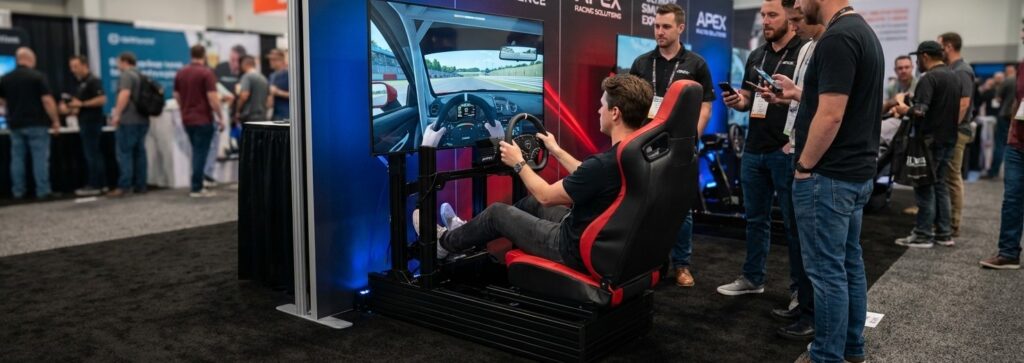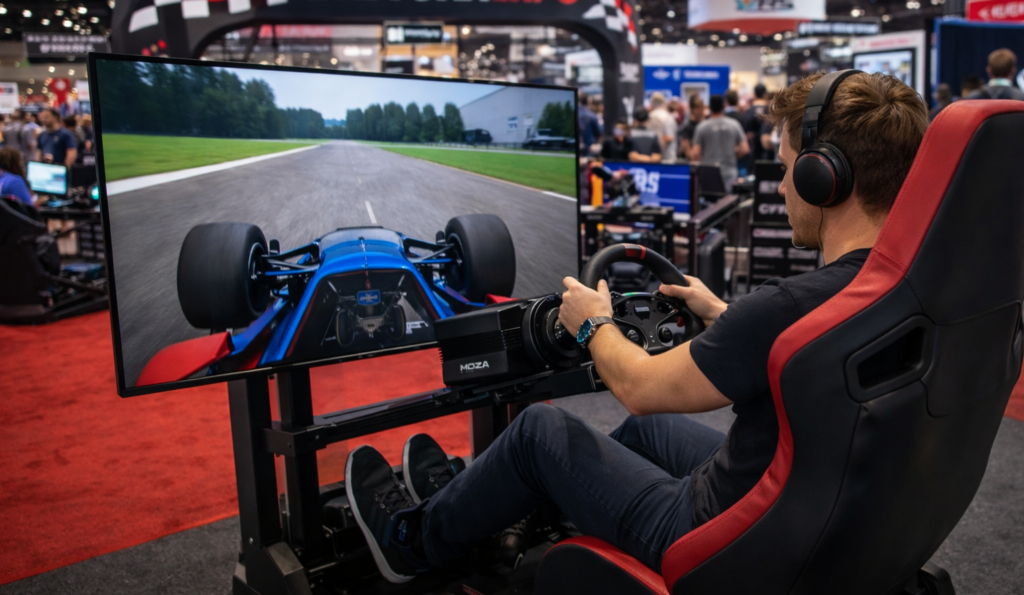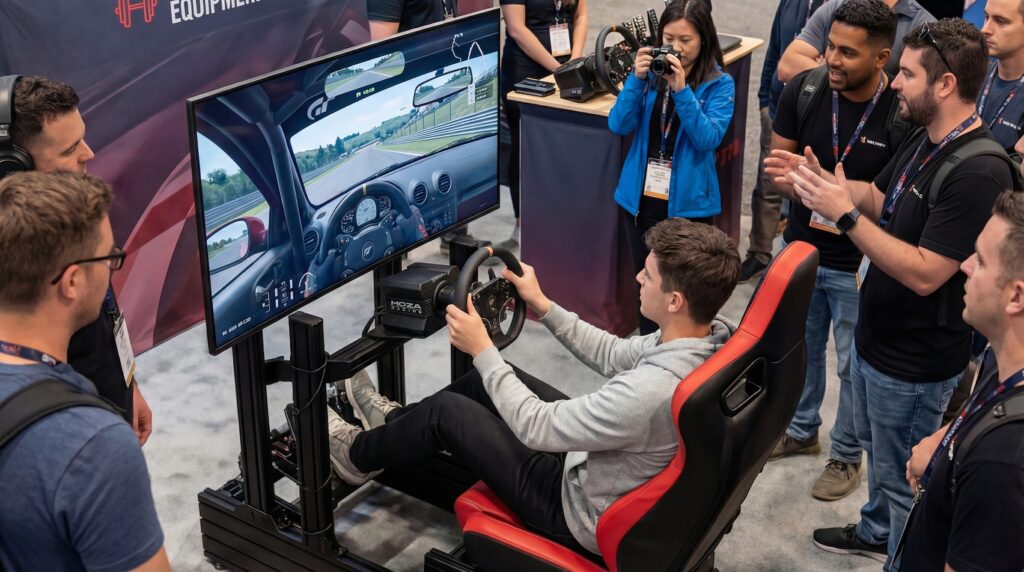
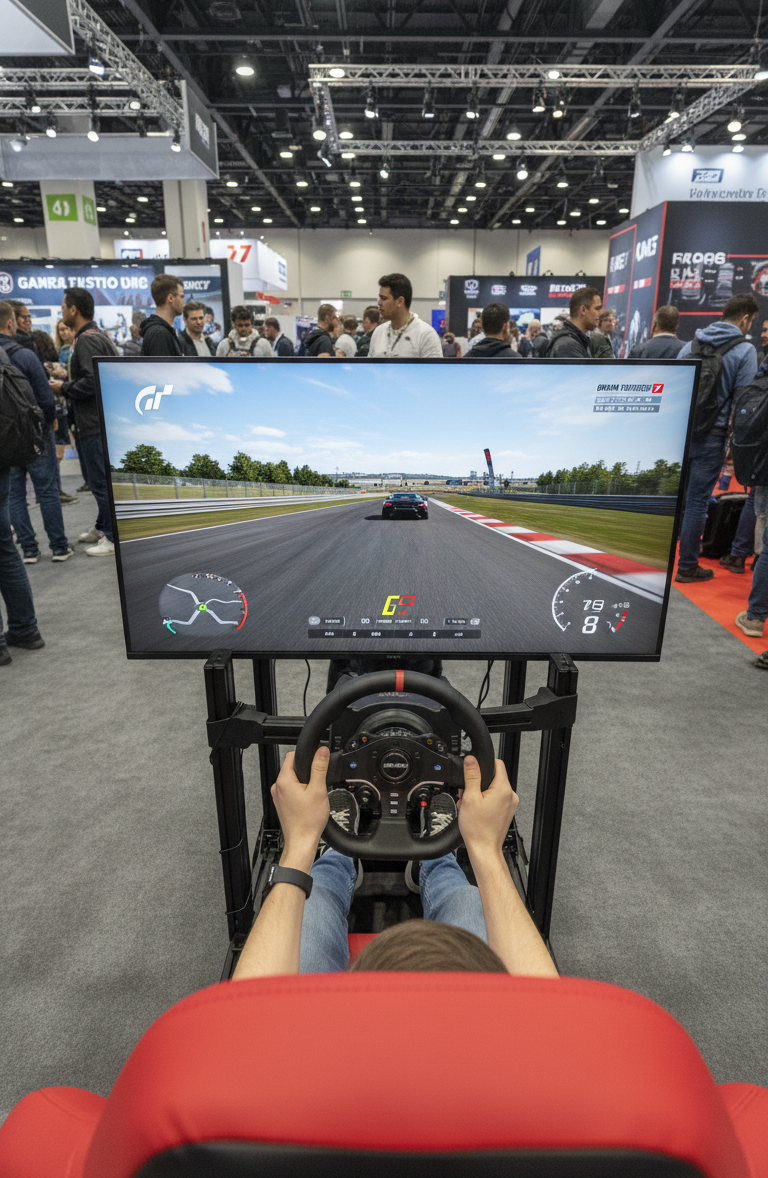
Renting a racing simulator for an expo can be a strong way to introduce interaction into a booth. However, the effectiveness of the activation depends on how well the setup is planned and how it functions throughout the event.
In expo environments, where space is limited and attention is highly competitive, the simulator needs to be positioned and managed in a way that feels natural within the booth while still drawing interest from nearby attendees.
Understanding the Space Before the Setup
Before confirming a setup, it is important to evaluate how much usable space is available. The installation requires more than just the footprint of the equipment, it also needs room for participants to get in and out comfortably, as well as space for others to observe.
Tight layouts can make the experience feel restricted, while more open layouts allow the activation to feel accessible and easier to engage with.
Planning Visibility From Outside the Booth
At an expo, most engagement starts from outside the booth. Attendees walking by should be able to understand the activity immediately without needing explanation.
This makes screen placement and orientation critical. The display should be visible from multiple angles, allowing people nearby to follow what is happening and become interested in participating.
Clear visibility reduces hesitation and increases the likelihood of spontaneous interaction.
Managing Flow When Renting a Racing Simulator for an Expo
Expo traffic is not constant. There are moments where interest builds quickly, and without structure, participation can become disorganized.
When renting a racing simulator for an expo, it helps to define how sessions will be managed. Short, consistent runs allow more attendees to participate while keeping the experience moving.
Clear instructions and simple queue management help maintain a steady flow, even during peak hours.
Considering On-Site Operation and Support
A simulator setup requires attention throughout the event. Participants may need quick guidance, sessions must be reset efficiently, and any technical interruptions should be handled immediately.
Having on-site support ensures that the experience remains consistent and avoids unnecessary delays. This contributes to a more professional and reliable activation overall.
Renting a Racing Simulator for an Expo With Booth Objectives
Before finalizing the setup, it is important to define what the activation is meant to achieve. Whether the focus is visibility, interaction, or structured participation, the simulator should support that objective.
Small adjustments in how the experience is organized can influence how attendees engage with it and how effective the activation becomes.
Creating a Setup That Works Throughout the Event
A successful activation is not only about attracting attention at the beginning of the event, but about maintaining consistent activity over time.
When the setup, flow, and operation are properly aligned, the simulator becomes a reliable part of the booth rather than a one-time attraction. This creates a more cohesive and effective presence throughout the expo.